DEVELOPMENT11 May 2026
Digital Marketing Institute in Noida

With professional training in digital marketing that includes SEO, PPC, social media, content, email, analytics, and more, you can change your career. Receive practical experience through real-world projects, develop skills with tools and data-driven methods, increase brand awareness, and take advantage of in-demand employment prospects. Improve your abilities by enrolling now!
What is Marketing?
- Marketing is a strategic, comprehensive discipline that goes above sales and advertising to match a company's product, pricing, positioning, and promotion with the demands of its customers while creating profitable relationships and benefiting society at large.
How many Types of Marketing?
- There are two types of Marketing
- Traditional Marketing
- Digital Marketing
1.What is Traditional Marketing?
- Traditional marketing refers to the offline, non-digital methods companies have used for decades to reach and influence consumers. It involves one-way communication via physical or broadcast media rather than interactive online platforms.
Example:
- Print Media – Ads in newspapers, magazines, brochures, flyers, and catalogs
- Broadcast – Television and radio commercials that broadcast messages to mass audiences
- Outdoor Advertising – Billboards, posters, signage in public spaces
- Face-to-Face / Event Marketing – In-person selling, trade shows, booths, and sponsorships
- Direct Mail – Personalized mailers, postcards, or catalogs sent to homes
- Telemarketing / Cold Calling – Phone-based outreach to pitch products or services
Drawbacks :
- Higher Costs – Production, distribution, and media buying can be expensive
- Limited Measurability – Harder to track direct ROI compared to online campaigns
- One‑Way Communication – No immediate feedback loop; audience can't easily engage
- Less Targeted – Often broader messaging versus precision digital targeting
2. What is Digital marketing?
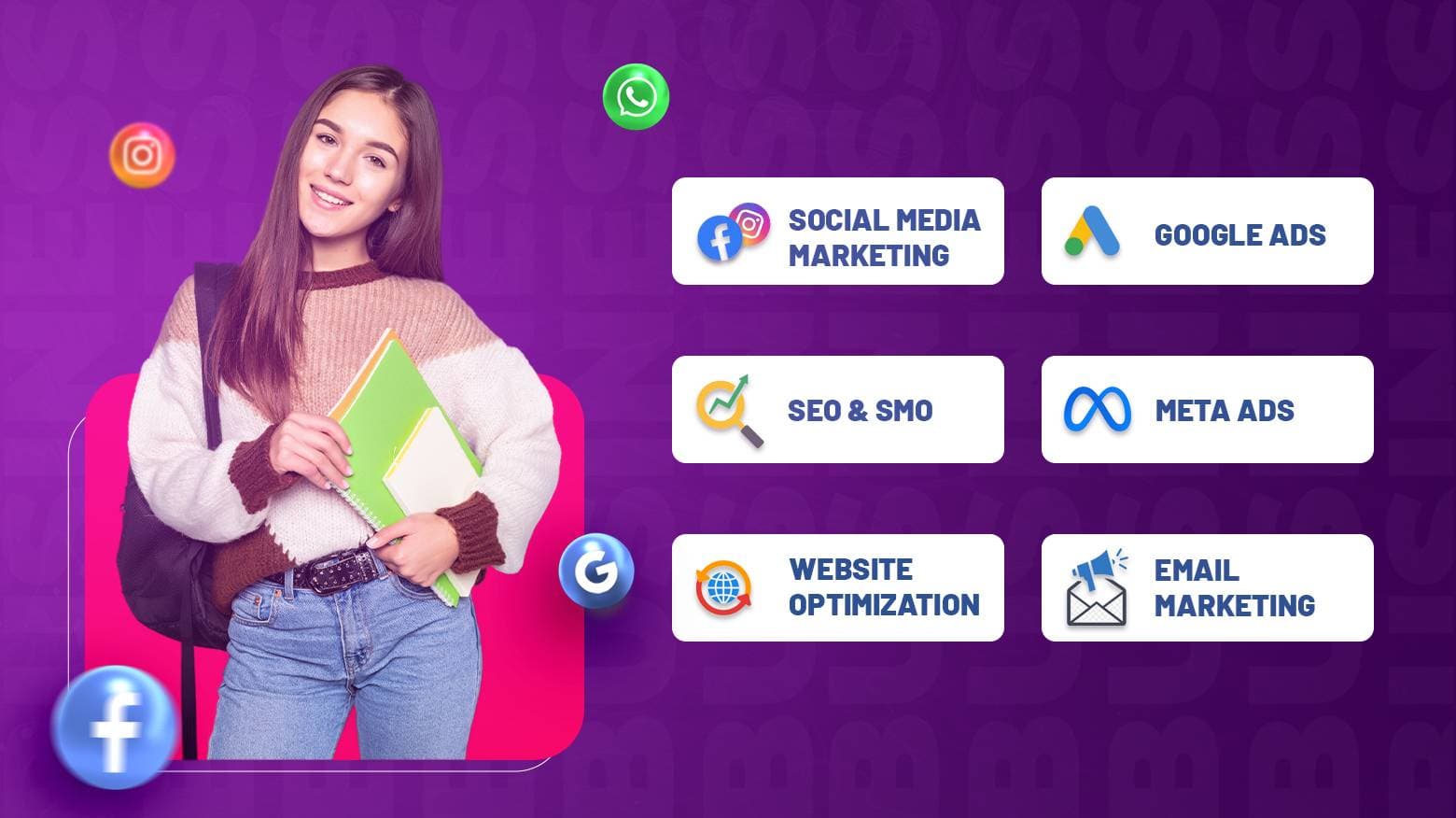
- Promoting goods and services using digital channels, such as websites, search engines, email, social media, apps, and more, is known as digital marketing. For your clear understanding, below is a breakdown.
Benifits:
- SEO & SEM: Improving visibility in search engines through organic tactics (SEO) or paid ads (SEM).
- Content Marketing: Creating valuable content—blogs, videos, ebooks—that attracts and nurtures customers.
- Social Media Marketing: Using platforms like Facebook, Instagram, TikTok for brand building, engagement, and ads.
- Email Marketing: Targeted emails nurturing relationships and driving conversions.
- Display & Programmatic Ads: Automated buying of ad space, powered by AI and real-time bidding.
- Affiliate & Influencer Marketing: Collaborations with individuals or affiliates to promote brands to their audience.
Why should we do Digital Marketing:
- Because we want to reach our business to as many customers as possible and grow our business
What do we do in this?
- SEO
- SEM
- SMM
- Google Ads
- PPT
- Email Marketing
What is Seo?
- The careful method of improving your website's exposure and rating on search engines like Google, Bing, and Yahoo—without using funds on advertisements—is known as search engine optimization, or SEO. By matching the structure and content of websites with user searches, it seeks to draw in organic (non-paid) traffic.
There are three types of SEO?
- White Hat Seo
- Black Hat Seo
- Grey Hat Seo
- What is white hat SEO
- White Hat SEO refers to the ethical, sustainable optimization practices that align with search engine guidelines—especially Google's—to improve rankings and user experience over the long term.
Core Techniques:
- High-Quality Content Creation
- Keyword Research & Natural Usage
- On-Page & Technical Optimization
- Ethical Link Building (Off-Page SEO)
- User Experience (UX) Improvements
- Social & Local Signals
- What is Black hat SEO
- To artificially raise search engine results, black hat SEO refers to unethical and misleading strategies that go outside search engine rules, such as those set out by Google or Bing. These approaches put short-term profits preceding customer experience and sustainability over the long term.
Core Techniques:
- Keyword stuffing
- Cloaking
- Hidden text/links
- Link farming and private blog networks
- Doorway pages
- Content scraping/duplicate content
3.What is Grey hat SEO?
- Still, it appears that you may be talking about Grey Hat SEO (often called "gray hat") rather than "great hat SEO." Between dangerous Black Hat SEO and ethical White Hat SEO, there is a morally and ethically gray space that is occupied by Grey Hat SEO.
Core Techniques:
- Purchasing backlinks
- Spun or lightly automated content
- Private Blog Networks
- Negative SEO
There are three techniques of SEO ?
- On-page SEO
- Off-page SEO
- Technical SEO
What is On-page SEO?
- The optimization done inside the pages of your own website that improves search visibility and user experience is referred to as on-page SEO, or on-site SEO. By focusing on the elements of each page that you can directly manage, it is different from off-page SEO, which highlights external signals like backlinks, and technical SEO, which addresses site performance and crawlability.
Core Techniques:
- Keyword Optimization : Research your business search intent and prevent cramming, organically include target keywords into titles, headers, body content, and picture alt text.
- Title Tags & Meta Descriptions: Create engaging meta descriptions (≤160 characters) and original, compelling title tags (≤60 characters) that incorporate keywords and increase click-through rates.
- Header Tags (H1–H6): To help visitors and search engines alike understand the structure of your website, use H1 for the main page title and H2–H6 for subheadings.
- URL Structure: Make short, informative URLs with keywords; stay away from complicated strings or needless evidence.
- Content Quality & Relevance: Provide unique, informative material that meets user demands, responds to relevant inquiries, and is updated often to stay current.
- Internal Linking: Use informative anchor text to connect to similar pages on your website to spread link equity and help crawlers in finding new material.
- Image Optimization: Incorporate captions and informative file names to enhance accessibility and context, and compress photos for quicker load times.
Benefits of On-page SEO
- Improved Rankings & Visibility: Well‑optimized pages are more likely to appear on page 1 of search results, capturing higher click volumes .
- Enhanced User Experience: Clear navigation, fast load times, and valuable content reduce bounce rates and increase dwell time.
- Higher Conversion Potential: Visitors arriving via relevant, intent‑focused content are more likely to convert into leads or customers.
- Quicker Impact: On‑page changes often yield faster visibility improvements than off‑page tactics, as search engines can re‑index updates rapidly.
What is Off-page SEO?
- The strategies you use outside of your own website to increase its authority, being exposed, and credibility in the eyes of search engines like Google are all referred to as off-page SEO. Off-page SEO employs external signals to develop reputation, mostly through backlinks, social mentions, and reviews, in contrast to on-page SEO, which focuses on improving your site's content and structure, or technical SEO, which enhances site performance and crawlability.
Core Techniques:
- Link Building (Backlinks)
- Social Signals & Brand Mentions
- Citations & Local Listings
- Online Reviews & Reputation
- Guest Posts, Influencer Outreach & PR
- Forum & Community Participation
Why Off-Page SEO Matters?
Authority & Trust: External validation through links and mentions signals to search engines that your site is credible
Improved Rankings & Visibility: Sites with strong off-page profiles tend to rank higher and attract more organic traffic
Referral Traffic: Backlinks and social shares drive direct traffic from external sources to your site .
Local SEO Boost: Citations and reviews help local businesses appear in map packs and local search.
What is technical SEO?
- Technical SEO is the backend optimization which improves user experience and performance while assisting search engines in better crawling, indexing, and understanding your website. It serves as the basis for backlinks and content.
Core Elements of Technical SEO:
- Crawlability & Indexability: Creating a clean site structure, optimizing internal links, updating XML sitemaps, and configuring robots.txt so search engines can access all important pages
- Site Speed & Performance: Improving website load speeds through caching, image compression, code reduction, and quick server response is essential since sluggish load times degrade rankings and raise bounce rates.
- Mobile-Friendliness: Ensuring responsive design and usability on mobile devices. Google's mobile-first indexing makes this essential.
- Secure Protocol (HTTPS): Implementing HTTPS for secure data transfer. This is a lightweight ranking factor but crucial for user trust and SEO.
- Structured Data & Schema Markup: Using structured data (e.g., JSON-LD) to help search engines understand your content and enable rich results (snippets, reviews, events)
- URL Structure & Canonicalization: Crafting clean, descriptive URLs, managing duplicate content with canonical tags, and ensuring correct redirects.
- Fixing Errors: Identifying and resolving issues like broken links, 404s, duplicate content, server errors, and crawl budget waste.
- Technical Tools & Audits: Using tools like Google Search Console, Screaming Frog, Ahrefs, GTmetrix, etc., to audit health and fix issues